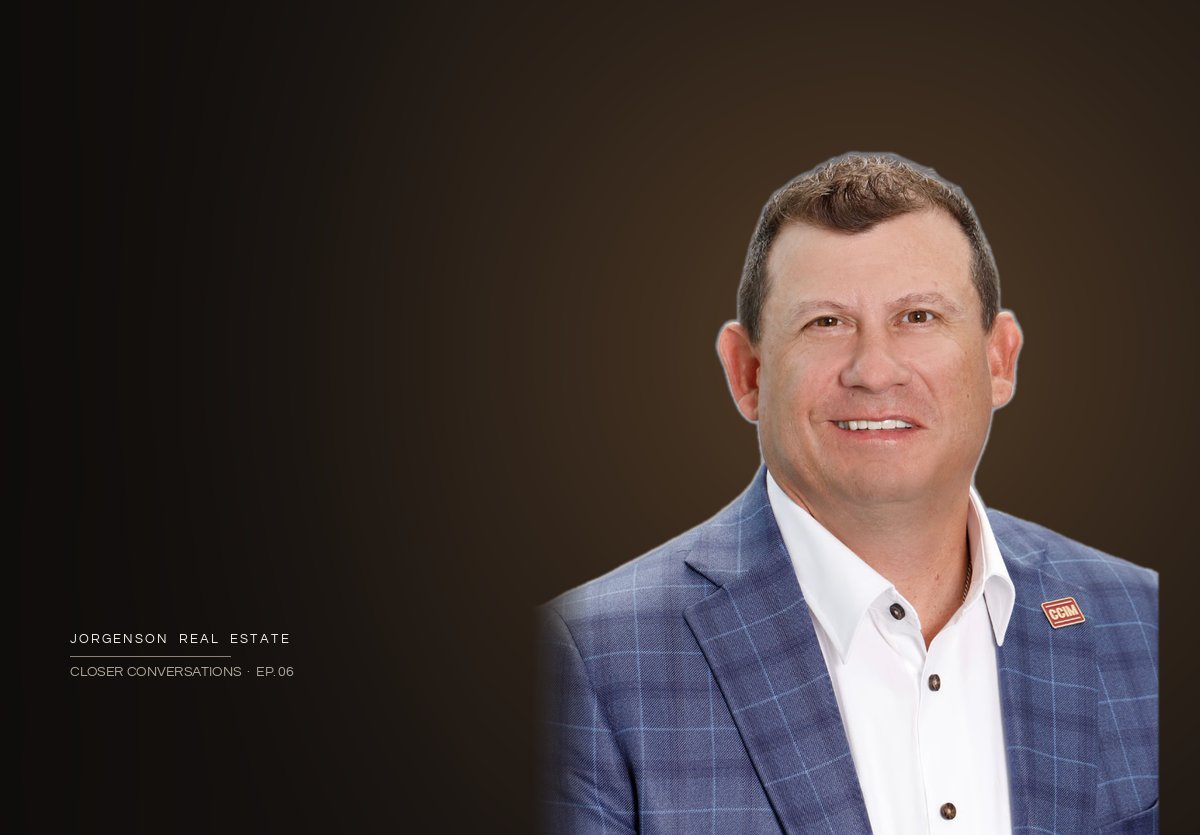
Robert Sherwood, CCIM, leads Jorgenson Commercial, the commercial side of Jorgenson Real Estate, and owns Sherwood Realty Group. He is president of the Central Texas Commercial Association of Realtors (CTCAR) and serves on the boards of the National Association of Realtors and CCIM Central Texas. In this episode of Real Estate, Straight Up, he and Kasey Jorgenson explain why a commercial lease is not "just a lease": if no one negotiates for the tenant, the tenant usually ends up paying for almost everything.
Key takeaways
- When you call the number on a For Lease sign, you are usually talking to the landlord's broker, whose duty is to the landlord, not to you.
- Even the Texas Realtors commercial lease forms have about 25 or 26 items where landlord and tenant can negotiate who is responsible.
- In commercial leases, HVAC repair and replacement is often the tenant's job. A Round Rock business owner Kasey met paid $25,000 to $30,000 for two new HVAC systems a month after moving in.
- Triple net (NNN) means the tenant pays a pro rata share of property taxes, insurance and common area maintenance on top of base rent, trued up every 12 months.
- Robert's example: $25 a square foot in base rent plus $14 or $15 in triple nets is really about $40 a square foot.
- Startups get further with landlords when they show up with a business plan, financial statements and a personal guarantor.
- Residential agents who want to move into commercial should find mentorship and expect to work 18 months to two years before the income is steady.
Why is it so hard for a startup business to lease commercial space?
Robert said new businesses are underserved. Large firms focus on big deals, so founders often call the sign themselves, and the landlord's broker may simply say the landlord doesn't take startups. Robert said that is more common in today's market.
His fix is to prepare the business before the search starts. Jorgenson Commercial works with SBA lenders and free SBA counselors who help tenants build a business plan, and tells them which financials to gather. "They've got a path to success, they've got a business plan, they've got a financial statement, they've got a personal guarantor," Robert said. Kasey noted that this makes the tenant much easier to sell to a landlord or listing broker.
Who pays for HVAC in a commercial lease?
Often the tenant. Kasey shared the story of a Round Rock business owner who found his space and asked his residential agent to handle the lease. A month after moving in, he had to replace the building's entire HVAC system, two units at $25,000 to $30,000, on top of paying for his own finish-out. "In commercial, that's more often than not a tenant's responsibility," Kasey said.
Robert said competence is the real issue. "Number one lawsuit in our industry, commercial leases," he said. The Texas Realtors commercial lease forms have about 25 or 26 negotiable items, and without someone who knows how to negotiate them, "nine times out of 10, tenants paying for everything." A professional landlord's broker will tell an unrepresented tenant they can pass along written requests but can't advise them on how to negotiate.
What does triple net (NNN) mean in a commercial lease?
The price per square foot you see is base rent, which Robert called the landlord's pure cash flow. The NNN, or triple nets, are property taxes, property insurance and common area maintenance. In a retail center, each tenant pays its pro rata share based on square footage. These costs pass straight through to the tenant and true up every 12 months, so when taxes and insurance rise, so does your cost. "You may be in a center where your triple nets are $14, $15. Well, now you're at $40 a square foot," Robert said.
Some older properties use an all-in modified gross lease, which Robert tries for first when representing a tenant. If it's triple net, he audits the numbers before signing, asking for the tax bill and insurance costs to set a year-one baseline, then reviews them each year. On the landlord side, he moves owners toward triple net to protect their cash flow. "The investment is your cash flows," he said. Robert added that Texas is a very strong state for landlord protections, which is one more reason tenants need their own representation.
Why are so many tilt-wall warehouses going up around Austin and Williamson County?
Most of the big concrete buildings along the I-35 corridor, including the ones near the Georgetown airport, are spec buildings, built before tenants sign. Robert said a long row of dock doors usually means logistics or distribution, while a substation on site often points to high-end manufacturing or a data center. Much of it followed Samsung and Tesla, and absorption is high because companies like SpaceX, Tesla, Samsung and their suppliers need space to make and move goods.
The gap is in smaller space. "What we don't have in the Austin market is that sweet spot of 15,000 to say 35,000, 40,000 square feet," Robert said. New buildings are usually demised, or divided, down to about 50,000 square feet at the smallest. Robert said most sit outside city limits, using septic systems and wells instead of city utilities.
How can a residential agent get into commercial real estate?
Do it with mentorship. Robert described two kinds of residential agents in commercial. Some just take on commercial deals without guidance, which Kasey and Robert said is a TREC violation that can land both the agent and their broker in trouble. The ones Robert's CCIM circle calls "commercial curious" go about it the right way, asking experienced commercial brokers for mentoring and a second set of eyes on their paperwork.
Robert pointed agents to CTCAR, which covers 26 Central Texas counties and focuses on education and advocacy, and to CCIM Central Texas, a smaller group you don't need to be a CCIM candidate to join. Jorgenson Commercial has an eight-week commercial boot camp. Expect a long runway. "True expectations to make money in this industry, you've got to be willing to scrape for 18 months, yeah, two years, especially in today's economy," Robert said. One of his deals has been under contract for over two years, and agents usually aren't paid until closing.
It's also a face-to-face business. "90% of my business is done face-to-face," Robert said. Full-time commercial brokers generally aren't MLS members and use commercial information exchanges instead. Texas is a non-disclosure state, and Robert and Kasey noted that owners often want to keep sale prices private because once the appraisal district sees a price, it can affect their property taxes. Our guide to Central Texas property taxes covers how appraisals affect your bill.
If you're a business owner looking for space, an investor, or an agent curious about commercial work, talk with Robert Sherwood or the team at Jorgenson Commercial before you sign anything. More episodes are on the Real Estate, Straight Up podcast page.
Questions from this episode
What does triple net (NNN) mean on a commercial listing?
Triple net is the tenant's pro rata share of property taxes, property insurance and common area maintenance, paid on top of base rent and trued up every 12 months. Robert Sherwood's example: $25 a square foot in base rent plus $14 or $15 in triple nets comes to about $40 a square foot.
Who pays for HVAC repairs in a commercial lease in Texas?
It's negotiable, but in commercial leases it is often the tenant. Settle it before you sign.
Can the broker on the For Lease sign represent me as a tenant?
That broker usually represents the landlord and can't advise you on how to negotiate. Robert Sherwood recommends tenants get their own representation.
How long does it take a residential agent to build a commercial business?
Robert Sherwood tells agents to expect 18 months to two years before steady income, and to get mentorship and education through groups like CTCAR and CCIM Central Texas.
Listen to the episode
Also on Apple Podcasts, Spotify, YouTube. All episodes.
In this episode
- 0:00Real Estate Straight Up Kickoff
- 1:35What CCIM Actually Means
- 2:54Why Startups Get Ignored
- 6:42The Hidden Cost Of Bad Advice
- 9:48Triple Net Leases Explained
- 13:13Why Tilt Wall Warehouses Boom
- 19:00Finding Your Commercial Niche
- 21:56Resumercial Vs Commercial Curious
- 29:39How To Break Into Commercial
- 35:28Wrap And Next Steps
Related
Full transcript
Read the full transcript
Real Estate Straight Up Kickoff
Kasey Jorgenson 0:01 Welcome to Real Estate Straight Up, where we skip the scripts and talk about what's really going on in the Central Texas real estate market. I'm Kasey Jorgenson, founder of Jorgenson Real Estate in Round Rock, Texas. This is where we break down how deals are actually getting done, what top agents are doing differently, and what most people aren't saying out loud about this market right now. No fluff, no BS, just real estate straight up. Welcome to Real Estate Straight Up. I'm Kasey Jorgenson, broker and owner of Jorgenson Real Estate here in Central Texas. And today I'm really excited about this one. We are joined up with Robert Sherwood. And so, Robert, a little quick background on him. He is an influential person in our local industry. He's on the board of directors with the National Association of Realtors. He's on the board of directors for CCIM Central Texas, which we'll talk about. He is president of CT Car, which is Central Texas Commercial Association of Realtors, and also Vice Chair of Government Affairs for the CCIM Institute. And there's more, but we honestly, my memory ran out of space. So, but that's that. But we're really excited. So Robert leads Sherwood Realty Group. He owns that group, and he is also the head of Jorgenson Commercial here. So he supervises and helps out with anything commercial within our brokerage. So I'm I'm excited to have you here, man. Awesome. I'm excited to be here. So I just said a bunch of letters and alphabet soup and everything
What CCIM Actually Means
Kasey Jorgenson 1:35 like that. What is CCIM?
Robert Sherwood 1:38 So CCIM is a certified commercial investment member. That is one of the highest designations a commercial agent or broker can receive. It is basically a full master's level finance degree that is commercial-based and investment based.
Kasey Jorgenson 1:57 Awesome. So yeah, I was always told it was like the doctorate of commercial real estate.
Robert Sherwood 2:02 It's a good way, good way to sum it up. The only other designation that carries close to the same weight is SIOR, which is Society of Industrial Office real estate. That is more based on actual volume of your commissions for that last tier. So CCIM, you have all of your coursework plus your portfolio proving that you've done business in the realm of specialty.
Kasey Jorgenson 2:26 So you've done some commercial business. Oh, yes. Yeah. I I think which we'll talk more about it here in a bit, but I know we were talking about like getting into commercial real estate, especially from a residential agent's perspective. So we'll we'll talk more about that. But CCIM is kind of like the authority in this day and age, right?
Robert Sherwood 2:44 Yes, it is definitely a differentiator between a regular commercial agent versus someone who is top tier.
Kasey Jorgenson 2:50 Well, sweet, man. We're pumped. We're pumped to have you. Awesome. All right.
Why Startups Get Ignored
Kasey Jorgenson 2:54 So I I know we had a couple things that we were chatting about before we we flipped on the camera. And one of the things was kind of uh underserved consumers when it comes to commercial real estate and who out there kind of is is is you have these massive commercial firms essentially that are out there and they're managing huge properties and they're doing the big deals and they're doing the the giant multifamily projects and the giant office complexes and things like that. When I've talked to some of my clients that were small businesses, though, they were left kind of scratching their heads because they they could never really find a resource or a good local commercial agent to like kind of help get their business to that next step and things like that. You got experience with people like that, yes?
Robert Sherwood 3:42 Absolutely. So yeah, that's kind of a double-edged sword. So a lot of times what you'll have is you'll have those businesses that are either brand new startup businesses or maybe, you know, first couple of years and then they're looking to expand and they try to take the task on themselves instead of engaging with someone because yeah, they call the big corporate signs that they see at the spaces they're looking at. And those agents typically are not gonna work with the startup business just because there's so much heavy lifting to be done with that and the transaction volume in their eyes. Obviously, you know, time is money. Yep. So they don't do that. And, you know, and this will kind of parlay into, you know, further in our conversation about residential agents getting into commercial as well. You've got to cut your teeth. Commercial is something, you know, just like residential. When you start out, you're, you know, you're bootstrapping it. And so commercial agents who are bootstrapping it, they, you know, they'll take everything they can until they figure out what is their niche. And startup businesses is definitely underserved. The biggest problem they have is especially if they don't have representation, they reach out, you know, they see a four-lease sign and they reach out and call directly. And that landlord's broker is going to be like, oh, you're a startup business? Yeah, our landlord doesn't do startup businesses. We don't want the risk. And in today's market, that is more common. So to help those businesses, it benefits them to reach out, you know, to you know, smaller firms or firms that service new startups because it gives them that professional representation and the coaching. So when I do a consultation call with referrals, I get a lot of referrals from residential agents. And so I vet them. And then again, I've got a threshold of my time versus value. But the beauty of Jorgenson Commercial is we've got other agents, both on Sherwood Realty Group. And as we expand Jorgenson Commercial, is hey, this is your niche, whether it's retail or industrial, do the vetting, and then we feed them to that. We've got a path to success for those startup companies. We work with SBA lenders, we have SBA counselors that work for free for them that help them build their business plan. We tell them what financials they have to gather. And we kind of lay out that groundwork of, hey, when we find the right spot, it's our job to negotiate on your behalf. We're gonna sell your company, but we need all this framework. So when we find the spot, we can present this documentation and it helps it go further where we can convince that landlord, like, hey, this isn't just some mom and dad are like, oh, I cook really good food. I want to open a restaurant.
Kasey Jorgenson 6:19 Yep.
Robert Sherwood 6:19 They've got a path to success, they've got a business plan, they've got a financial statement, they've got a personal guarantor, and we educate them along that way on that before we even start the leasing.
Kasey Jorgenson 6:28 Well, yeah, that's a lot easier of a sell to go to a a landlord or a listing broker and say, I've got these people, and here's where they are in their business journey, and here's everything we've prepared. It's a lot easier to sell it to them. Absolutely.
The Hidden Cost Of Bad Advice
Kasey Jorgenson 6:42 Yeah. And it was, you know, we we were talking before we filmed, there was uh, you know, I I ran into a local Round Rock business owner here, and and I always ask, I said, you know, who helped you lease this space? They did a fantastic job with the space. And he said, I, you know, we found the space and I just called my residential agent and they came in and did this. And he said, and he told me straight up, he said, you know, I wish I wouldn't have done that because I moved in and one month later I had to replace the entire HVAC system in the building. Because I in residential, that's always the landlord responsibility. But in commercial, that's more often than not a tenant's responsibility. And so he moved in, paid for his own finish out, not much of that was negotiated with the business, and then also had to shell out somewhere between 25 and 30,000 for two HVAC systems. And so that was I, you know, it resonated with me. I said, Man, I wish, I wish you would have called us, wish we'd have known each other, you know, at that point. But that's a common story.
Robert Sherwood 7:45 Oh, very common story. And that's that that's the the big pitfall too with the competency of you know, agents who aren't competent in commercial and they're like, oh, it's easy, it's a lease, I can do that. Number one lawsuit in our industry, commercial leases. And it's the easiest way to get sued if you don't have the competency. And on a commercial lease, even if you use the promulgated forms here in Texas through Texas Realtors, there's about 25, 26 items on there that you can negotiate. Who's responsible for it? The landlord or the tenant? And if you don't have somebody who understands how to do that, negotiate on your behalf, yeah, nine times out of 10, tenants paying for everything. Yeah.
Kasey Jorgenson 8:28 Yeah, the landlord and the commercial agent, especially if they find out in my experience, you know, working with you, if if the landlord, if the tenant side doesn't have solid representation that knows what they're doing, the landlord owes their fiduciary duty to to, or the listing broker owes their fiduciary to the landlord. They are going to negotiate on their behalf, right? Absolutely. Absolutely. All those things will end up at tenant expense. Yep. So yeah.
Robert Sherwood 8:53 Yeah, and yeah. And in the commercial world, you know, so obviously in Texas, you know, we don't have dual agency, we have intermediary, but in the commercial world, you'll see a lot of times the commercial agent represents the landlord. And if the tenant calls out directly in that pitfall and they don't have representation, all they tell them, you know, a professional broker is going to say, Hey, I can't negotiate on your behalf. Here's the terms for the landlord if you agree to it. I can write the lease up and we can sign it. If you review it and you have any points, you can send them to me in writing and I can present them to the landlord. But I can't tell you how to negotiate your thing. And so what will happen is everything gets pushed to that tenant side. They don't even know to ask, you know, like negotiate the base rents, the triple nets, you know, oh well, what happens if the HVAC breaks? All of that. They just everything gets pushed on tools.
Triple Net Leases Explained
Kasey Jorgenson 9:48 So let's talk about that really quick because for many residential agents, and I know most businesses that aren't aren't already familiar with leasing their own space, that word triple net or NNN is out there everywhere. What exactly how how you you see things where it's like a price per square foot for residential, and then it says plus triple net or plus NNN. Can you give us a quick rundown of what that is?
Robert Sherwood 10:17 Yes. So the price per square foot is your base rents. That's your pure cash flow. The NNN or your triple nets is going to be your taxes, your insurance, and your common area maintenance. So if you're in a retail center and there's a management company, whatever that is, you take your prorata square footage of the entire center. And however much of that you have, you pay the property taxes, you pay the property insurance, and you pay the property management company. That is a straight pass-through to the tenant. There's a true up every 12 months. So when taxes go up and insurance goes up, that is a pass-through to the tenant. And so you have to be aware of that because you're going in thinking you're paying $25 a square foot. Well, you may be in a center where your triple nets are $14, $15. Well, now you're at $40 a square foot.
Kasey Jorgenson 11:10 So what people should take away from that is landlords are financially protected in the commercial world if they're doing a triple net leasis. Which is most common.
Robert Sherwood 11:19 Yes. You'll find you'll find some older properties and landlords, well, they'll do modified gross.
Kasey Jorgenson 11:24 And that's more like a residential where the thing is. Yeah, where it's all in.
Robert Sherwood 11:27 Yeah. It's just all in. And so and that's and that's one of the things. So with my experience and my relationships, I advise my tenants when I'm representing the tenant, hey, we're going to negotiate because obviously we want to get you on a modified gross if we can. Otherwise, we've got to figure out what the true triple nets are. And we do an audit before we sign it because we want to see proof. What was your tax bill, what was your insurance, and all that for year one baseline. And then we do a review every year based on the terminal lease. Well, when I go to a landlord and they're in an old center, and I'm like, well, what have you been currently running? They're like, Oh, well, I'm collecting $2,200 a month. I was like, all in, triple net. Well, it's just, yeah, they cut me a check. Now we got to get you off that. We got to get you onto a triple net.
Kasey Jorgenson 12:14 Yeah.
Robert Sherwood 12:14 Because when your taxes go up and your insurance go up, we want to protect your cash flow. That's why you bought this property in the first place. It's an investment. Yeah. The investment is your cash flows.
Kasey Jorgenson 12:23 So yeah, it's a it's a totally different world when when comparing residential to this and and and who who who the law and who common practices favor is completely different.
Robert Sherwood 12:35 So completely different. And Texas is a very strong state and landlord protection. Very strong state for landlord protections.
Kasey Jorgenson 12:43 Right. Well, it's I I think if a lot of people are listening to this that aren't in the industry, that probably sounded like we were just talking in Mandarin or Greek to them, right? Yes. Stress is the importance. Like you can reach out, at least from our perspective at Jorgenson Commercial, you can reach out to Robert or anybody on our team and talk about hey, I'm I'm thinking about this and at least get the right direction to move and have a consult. So now switch gears a little bit. So
Why Tilt Wall Warehouses Boom
Kasey Jorgenson 13:13 that's kind of that new business angle. Commercial is a massive industry. You've got everything from gas stations to large industrial to skyscrapers and multifamily. I noticed that two years ago when I drove home from from the office, it was, you know, there was a lot more kind of open land and open space. Now I drive home and it is like those three-story concrete warehouses everywhere. And there's a bunch of them that appear to be available. And so I know somebody asked me, they're like, what are we doing with all this stuff? Like, are those data centers? Like, are those just warehouses? Like, like what's the deal? What's your perspective? Like, what why are they building so much of those throughout town?
Robert Sherwood 14:00 So, yeah. So those are tilt wall facilities. And most of what you see driving around is originally developed and delivered as specs, spec properties. So speculation, we're gonna get tenants to fill them. The difference between those, if you're in the industry, you can tell the difference. So if you drive by and you see one door after the next, dot doors all the way down the side, and you got 72, well, that's gonna be a logistics center. That's gonna be a distribution hub. If you see a massive center where, you know, there's maybe a substation on site, chances are that's gonna be high-end manufacturing or a data center. The deliver the deliverance of those buildings that just massively popped up over the last two, two and a half years, a lot of that was because we landed Samsung, we landed Tesla. So Austin was the baby of the industrial market for the state of Texas. DFW, Houston, San Antonio, they were the they're the big ones. Right. Their square footage compared to ours was humongous. And so everybody's like, oh, Austin is growing, you know, and now the headlines are like, oh, they're overbuilding, they're delivering too much. They've increased their industrial footprint by 200, 300% year over year. They'll never feel that. That's not true.
Kasey Jorgenson 15:23 Well, because those buildings, I mean, those are you, I think you said they were like 200,000 square feet. Yes.
Robert Sherwood 15:28 What you see like driving up I-35 corridor and you go up north through Georgetown and you see everything by the airport there. Right.
Kasey Jorgenson 15:34 Yep.
Robert Sherwood 15:35 Those are going to be typically, you know, 200,000 to, you know, maybe even a million square feet if you take the whole complex. They're designed for about 50,000 square feet, and they're geared for speculation of high-end manufacturing and things like that.
Kasey Jorgenson 15:50 But it's speculative. It's very speculative. They're building it to lease them out.
Robert Sherwood 15:54 Correct. And so the production and delivery of that has slowed down on the investment side because they're like, oh, wait, we do have a lot of inventory, but our absorption rate is so high in the market right now because we have so many companies like SpaceX, Tesla, Samsung, their subsidiaries, their providers, they're all looking for that space because they have to manufacture goods, get those products to them to be able to do their assemblies. What we don't have in the Austin market is that sweet spot of 15,000 to say 35,000, 40,000 square feet.
Kasey Jorgenson 16:30 Yeah, kind of that smaller to mid-size operation.
Robert Sherwood 16:32 Correct, right? There's not enough of that inventory, and we really aren't building it fast enough. So when you see those giant facilities going up that you're referring to, normally they demise those or put the demising wall, the separation wall, down to about 50,000 square feet. Yep. It's about the smallest unit.
Kasey Jorgenson 16:50 Which is still bigger than what you're kind of describing as that sweet spot.
Robert Sherwood 16:54 Exactly. And so when also when they build those spec buildings, they're really not getting into a specialty niche. So you get into industrial, just like commercial has got so many different verticals, each vertical in commercial has got its own little silos. So industrial, you got data centers, you got cold storage, you got distribution centers, you got logistics centers, you got manufacturing. There's so many different realms that go into that that it can get overwhelming for people.
Kasey Jorgenson 17:20 For sure. Yeah, I just, you know, from a you know, I'm in the industry, obviously, and I know just enough with commercial to be dangerous, which we've which we've said, right? But from my perspective, I look at it and I'm always like, like, man, they're just popping these things up left and right. So it's it's interesting. And it's interesting to see uh it's a good thing that we're still growing, at least. And I remember when I first started in 2010 here, there were shell buildings that were being sold at a discount. And I think the vacancy rate back then was well over 50%. Yes. And that stuff all got gradually filled up over time.
Robert Sherwood 17:56 So yes, it did. Yes. And and the reason why you see a lot of the industrial buildings popping up, especially Williamson County, is because from the investment side, the speculative build, obviously, you know, when you start getting into the math of investments and your yields, development projects offer the highest returns on your yields. Well, you can get dirt outside city limits in the extraterritorial jurisdiction or the ETJ or even the county where you don't have city utilities. Industrial, you can build buildings by dropping in a large capacity septic system, filling a well, so you don't have to pay city taxes, city utilities.
Kasey Jorgenson 18:36 Make your own infrastructure and call it a day.
Robert Sherwood 18:38 Exactly, and call it a day, so you get a highest and best use of that dirt at the cheapest acquisition price and delivering a product. So when you see all that, most of those buildings are not within city limits.
Kasey Jorgenson 18:51 Yep. Yeah, and that makes sense too. I mean, and then there's no city city inspections and all that other kind of stuff that goes with it too. So yeah.
Finding Your Commercial Niche
Kasey Jorgenson 19:00 Well, that's good. Yeah, it's uh it's great to talk about. What what would is your specialty? So if you could explain like briefly, if if somebody's listening to this and they're like, I need X, what's what's what's so that's that's the that's the hey man, yeah.
Robert Sherwood 19:16 So brief, my specialty really is the investment focus, and that can boil all the way down to site selection. So what eats up my time mostly is investment sales. People who are looking to get, you know, either cash on cash returns, they've got an internal rate of return they're looking at. They want their money to make money. Right. And so I dive into that. And that could be, you know, people come to me, they're like, oh, well, I'm in multifamily, I want multifamily. Well, why? Are you managing the property? Are you living on site, or are you investing to make money? And so then I can break that down. When I started my career, I cut my teeth. Commercial, everybody, you know, the big firms are like, what's your specialty? Are you industrial? Are you multifamily? Are you retail? My specialty was geographic. So I started with Williamson County. I could tell you the base rates and triple nets of a retail center, an industrial, an office, whatever it would be, Round Rock, Georgetown, Gerald. Right. And I would just go from community to community. So I was the Williamson County expert, no matter what the vertical was. As I went through my career and started going down the path to my pin and understanding the finance of things, investments is really where my specialty is. And then I picked the niche that underlies that best that fits my clients' needs.
Kasey Jorgenson 20:33 Yeah, perfect. Yeah, that's and it's similar in any industry, right? Like that that could be an attorney, that could be a residential agent, anybody. You kind of find where you're where you really thrive, where you're really clicking, and then your network expands from there. So yeah, it's been great. It the little side story with Robert is we when we were a team with a large brokerage that I won't name, we decided we had a hard time placing our residential clients that would reach out to us and asking for a commercial agent. We had a hard time giving them to and referring them to somebody and giving what we would call our kind of stamp of approval. And finally, Amy Van Horst approached me and said, Hey, I think I want to get into commercial. And I said, Amy, I think that's fantastic because we can now take our level of customer service and we know that we can place our referrals with you and and and they're gonna get that service that we're having a hard time finding. So Robert helped mentor Amy as Amy launched Jorgenson Commercial for us many years ago. And now Amy, of course, has moved on to Chicago and and and moved her family there and everything.
Robert Sherwood 21:42 And I actually pinned Amy in Vancouver when she earned her pin.
Kasey Jorgenson 21:46 Yeah, with her CCIM pin. Yeah. Yeah. So full circle. Robert mentored Amy and now Robert is is leading things up here with us. So it's it's pretty cool. All
Resumercial Vs Commercial Curious
Kasey Jorgenson 21:56 right. So we we touched on this briefly. We were talking. About residential agents practicing in commercial. There's a term that the commercial agents call them, which is well, yeah.
Robert Sherwood 22:09 So that the main term out there is resumercial, which is, you know, it's got a very poor connotation.
Kasey Jorgenson 22:15 It's a hybrid.
Robert Sherwood 22:16 It's a hybrid.
Kasey Jorgenson 22:17 Yeah.
Robert Sherwood 22:17 Us in the CCIM world, we coined our own. We like to call them commercial curious. That's good. And there is really a differentiator between those two. So a resumercial agent, the way we look at that as somebody who is a residential agent who just is like, oh, I can do this. And they just go and do it without reaching out for mentorship, guidance, competency.
Kasey Jorgenson 22:38 Which is a truck violation.
Robert Sherwood 22:40 It's a huge violation. By the way. And not only on the agent, but their broker as well. Right. And we see a lot of it. And it puts a bad reputation on the industry, especially the commercial side. Commercial curious, we coined, which is a better connotation because it's actually residential agents. Well, it's a more positive. Well, and we named it that because they're going about it the right way. They're residential and they are curious about commercial. So they're reaching out to CCIM Central Texas or CT Core, where it's a gathering of commercial agents and brokers who are experienced and they're like, hey, I want to get into this. Can you help me? Will you mentor me? Will you review my paperwork? Or can you guide me to becoming a professional? So there's two different kinds of phrases out there. Resident commercial, it fits like in Texas, rural Texas. Yeah. Granted, you're going to come across people who they do residential and commercial. They bootstrapped it, they had to, but you know, they're in a community of less than a thousand people. And there is no commercial brokerages out there. That's a different story. But when you start getting into the Austin MSA, you know, you're dealing with we're going, we're upwards of two million people now in the Austin Ronrock MSA. Residential agents practicing commercial, quick way for you to be sitting in court alongside your broker.
Kasey Jorgenson 24:02 Yeah. And and and then not all commercials created equal, right? Like I represented myself on purchasing a commercial property and everything before I had quote unquote commercial supervision. There are promulgated forms. So it doesn't have to be that scary, but I absolutely had somebody double check my work before Penn went to paper. And that's where it is really easy to mess up one deadline or one thing because it is a completely different contract.
Robert Sherwood 24:29 Absolutely. And so my word of ad my piece of advice to those residential agents who are looking to kind of dabble in commercial space and all that. As you referred, you know, I'm president of CT Core, that's Central Texas Commercial Association of Realtors. We overlay 26 counties here in Central Texas. So Abor, Five Points, Waco Board of Realtors. We go all the way up to Waco. We go all the way over to Bryan College Station. We go south down towards San Antonio. We overlay those residential boards. We are commercial brokers only.
Kasey Jorgenson 25:01 Yep.
Robert Sherwood 25:01 And so you get in there, we're about education and advocacy. So you start getting into the politics and the legislation. Session starts January 1st. There's going to be a lot of new proposed bills that affect the industry. Commercial is one of those hidden secrets. But you get in there, you start rubbing elbows with the commercial practitioners. And if you really want to go in, you can start plugging into CCIM Central Texas. Here in Austin, that is another level of commercial brokers. So CCIM Central Texas. CCIM Central Texas. CT Car. Correct. Those are your two best paths to education, networking, and mentoring to crossover in the commercial world.
Kasey Jorgenson 25:43 What about I know Texas Realtors also came out with the designation that they've been improving?
Robert Sherwood 25:48 I know when it first came out, it was Yeah, I actually I actually went through it when they first rolled that out. That's the tax, Texas accredited commercial specialist. I did that to audit it because I'd already earned my CCIM designation and really wanted to see what they were offering. It is a very solid program. It covers in depth, you know, kind of the introductions of, you know, what is your capital stack, you know, and different gotchas within the verticals of commercial real estate.
Kasey Jorgenson 26:22 So it's kind of like commercial real estate 101, essentially if it was a college.
Robert Sherwood 26:26 I would not agree with the way they named it, calling it a Texas accredited commercial specialist, because yeah, you have to go through tax one, tax two, and tax three classes, but the requirements on the portfolio is basically two contracts, which they count as a listing agreement or a buyer rep agreement, not an actual sales contract.
Kasey Jorgenson 26:47 That's interesting.
Robert Sherwood 26:48 CCIM designation, your portfolio, you have to do at least 20 transactions.
Kasey Jorgenson 26:54 Wow, yeah.
Robert Sherwood 26:54 Or 10 at 10 million or three at 30 million.
Kasey Jorgenson 26:58 Yeah.
Robert Sherwood 26:58 See the difference between calling yourself a commercial specialist versus actually doing the work. Yeah.
Kasey Jorgenson 27:04 So yeah, and I think, you know, I I I have actually applaud Texas Realtors for having something because for the longest time, the commercial side of our industry and any of the association of Realtors, I mean, it was like it was like freaking We're the red-headed stepchilders. Yeah, there was nothing. We still are.
Robert Sherwood 27:24 Yeah, but it's getting it's improving. It's getting it's it's improving. NAR is improving on it, Texas Realtors is improving on it. It's baby steps, you know, but for yes, you're correct. It's for the longest time. We've you know, we're the red-headed stepchilders. When you take the full economic cycle of real estate, commercial accounts for more than 52% of the revenue.
Kasey Jorgenson 27:46 Yeah.
Robert Sherwood 27:47 But in those associations, we're less than 10%.
Kasey Jorgenson 27:51 Yeah.
Robert Sherwood 27:52 And so that's where that's where you get into those pitfalls. They're gonna really focus on the residential education, the residential training, the residential focus because they're membership based.
Kasey Jorgenson 28:02 That makes sense. And and and I'll say this too. Like, I actually there's a lot of the commercial side of the industry that that I love. For example, you have to know the people in the industry, the local industry that you're working. Yes. And if you don't know them and they don't know you, that business just it isn't gonna get done. And so there is a lot of handshakes, there's a lot of networking, there's a lot of breakfasts, all of those things. I actually love I love that because residential agents can literally sit in their living room and do business and never interact in person with another agent if they don't want to. Oh, yes. And you cannot get away with that in the world.
Robert Sherwood 28:39 No, 90% of my business is done face-to-face.
Kasey Jorgenson 28:42 Yep.
Robert Sherwood 28:43 You know, so residential agents, you, you know, you all use MLS, multiple listing service. True commercial brokers, where we solely do commercial, we're not members of MLS. You know, we're gonna use our commercial information exchanges and those platforms because Texas is a non-disclosure state. Right. So clients don't want that sales price disclosed.
Kasey Jorgenson 29:06 I don't think they mind about the sales tax being or the sales price being disclosed. I think they mind about what that does to their property taxes.
Robert Sherwood 29:13 Well, so that's it, because that sales price, once it's disclosed, exactly you know, when the appraisal district gets eyes on that, yeah, it can impact that.
Kasey Jorgenson 29:23 So which they will get their eyes on it. So yeah, yeah, that it that makes total sense. And it's the same thing why luxury real estate, a lot of that stays off the MLS as well. They don't want the property tax ramifications when the sales price gets recorded publicly. So but I do like that.
How To Break Into Commercial
Kasey Jorgenson 29:39 All right. So kind of speed round. If if somebody approached us today and they walked in the door and they said, Robert Kasey, I want to get into commercial real estate. What would we tell them as kind of our plan on what they should do, who they should join, and how long it's gonna take them to actually get some traction and some income from commercial business?
Robert Sherwood 29:59 Oh, yeah. So yeah, that's a multi-step process. Obviously, you want to interview with different brokerages, you know, and starting with us. Starting with us. And then make sure you you find somebody like us where there's a structure in place of here's the cadence for your education. So just like what I brought with Sherwood Realty Group, I brought it over to Jorgenson Commercial when we joined partnership when we left, you know, who we were with.
Kasey Jorgenson 30:27 Big box broker. Yes.
Robert Sherwood 30:28 Yep. So we have you know training programs in place. You know, there's an eight-week boot camp of commercial education. You've got the guidance and the expertise of myself with the education committees of CT Core and CCIM. I steer you towards those classes based on your competency level and how fast you want to gear up.
Kasey Jorgenson 30:48 Right.
Robert Sherwood 30:49 True expectations to make money in this industry, you've got to be willing to scrape for 18 months, yeah, two years, especially in today's economy. Now, again, you can go out and you can cut your teeth on those smaller leases, but again, you got to stack a lot of them. And and it's good exposure. You start figuring out who you like to work for, you can figure out which clients, you know, are more of a, you know, not a real deal. But if you start.
Kasey Jorgenson 31:20 There are some commercial businesses that don't have their stuff together that that will waste your time for something.
Robert Sherwood 31:24 Absolutely, absolutely. And that's the beauty of joining a firm like ours, is because there's a vetting process.
Kasey Jorgenson 31:31 Yep.
Robert Sherwood 31:32 And then you can pick our brains on that as well as you're bringing in your own leads and you start asking questions, and we'll kind of grin at you and be like, Well, did you ask this, this, then this? And you'll learn very quickly of like, oh, here's my qualifying questions. This is a waste of my time. Let me go after this. This is real business. But if you're going to go into commercial because you know, you're thinking these huge commissions on these big projects, just be aware, you know, like right now. I'm under contract. We've been under contract for over two years. We're about to extend another 12 months.
Kasey Jorgenson 32:03 Yep.
Robert Sherwood 32:04 You know, and if you're on your regular representation agreement, you don't get paid till closing.
Kasey Jorgenson 32:09 Exactly. Yeah.
Robert Sherwood 32:10 So Yeah.
Kasey Jorgenson 32:12 And and I think that's an important thing. A lot of at least the residential agents I talk to that says that say, hey, I want to explore commercial. It it's it's a fine line where you want to continue serving your residential clients, but you have to take that leap of faith and you have to have that that that reserve income in your own business to be able to make that leap into commercial because it takes time.
Robert Sherwood 32:36 It does.
Kasey Jorgenson 32:37 Amy built a huge business under your mentorship, and it took her about one to two years on the commercial side.
Robert Sherwood 32:43 Yes, yes. And she actually she actually fast-tracked it.
Kasey Jorgenson 32:47 Oh, she was fat way faster than ever.
Robert Sherwood 32:49 Trevor Burrus, Jr.: And the beauty of that was because she was fed by your team, you know, all of those referrals from your guys' residential database where, you know, they're buying houses, but they're doctors, they're dentists, and we could trust her with the referrals.
Kasey Jorgenson 33:04 Exactly. And not to dash any other commercial agents that are in town. It was just, you know, we had a standard we were trying to keep, and and it's it's not always the same. So I'm glad to see that the commercial standard that we've built is get to gets to be survived and we get to expand upon it.
Robert Sherwood 33:20 And and it's a quick way to build your business because you the residential agents here at Jorgenson are, you know, very effective, have very successful. They've got huge databases, and they know how to qualify them. They they dig into their databases and what are you doing for a living? Oh, well, do you need commercial needs? You've got in-house representation of that. And it feeds her pipeline. And Amy was able to start commercial and earn her pin in two years.
Kasey Jorgenson 33:49 Which is super fast.
Robert Sherwood 33:51 Yes. That is that is high intelligence to knock out the coursework, but also very determined, great pipeline feed to build out that portfolio and get that portfolio portfolio submitted and approved.
Kasey Jorgenson 34:04 Yeah. Yeah. I guess we should wave to Amy because she'll probably see it. Miss you. Yeah.
Robert Sherwood 34:10 All right, what else? What do we miss? I think that's pretty good for a good start of it. But yeah, uh well, so I was plugging CT Core more for CCIM Central Texas. Again, more education, smaller group than CT Core, but a higher echelon tier. You do not have to be a candidate or a designee to be a member of that.
Kasey Jorgenson 34:31 I love the events that CCIM Central Texas are.
Robert Sherwood 34:34 They're great. They're great. You know, we've got our boat tour coming up on Lake Austin here uh next month. That is limited seats.
Kasey Jorgenson 34:41 Which is September, yes, 2026.
Robert Sherwood 34:44 And so, you know, uh, you can go to the websites for that and find that. CT Cars got a tailgate coming up at the best damn tailgate on the 40 acres in September, which will be a huge networking event as well. So, you know, find out different things, go to each site, look at the calendars, look at events, and get plugged in. It's the best way to get in there. You know, people are like, I don't know who, you know, to reach out to. Well, I'm I'm on the boards of both of those. I'm at all the units.
Kasey Jorgenson 35:13 Reach out to us.
Robert Sherwood 35:14 You'll find us here at the office, or you'll find me at any of those events for CCI and Central Texas or CTCR.
Kasey Jorgenson 35:20 Yeah. Well, that's solid.
Robert Sherwood 35:22 That's good, man. Yes. Appreciate chatting with you. Absolutely. I think that's it. Yeah, I think that covers it.
Kasey Jorgenson 35:27 All
Wrap And Next Steps
Kasey Jorgenson 35:28 right. And that's a wrap. If you got value out of this, don't keep it to yourself. Send it to someone who needs to hear it. And if you're in Central Texas thinking about making a move, we're here at Jorgenson Real Estate. We'll see you next time.
Transcript generated from the episode audio and lightly corrected; it may contain small errors.