Everyone on this lake had the same three-month countdown running in their head. Broker and longtime resident Jordan Lippe Walker had done the math out loud back in March, when water first started moving into the empty lakebed: figure roughly three months to reach full pool, then another month or so for the Guadalupe-Blanco River Authority to sign off before anyone could legally get a boat back on the water. That put safe recreation somewhere around July.
A storm system didn't get the memo. On April 20, 2026, one to three inches of rain fell across Guadalupe County in a matter of hours, the Guadalupe River ran high, and Lake McQueeney reached full pool that same day, weeks ahead of the late-June date most residents had settled in for. If you live here, you already know the water came back fast. What's less obvious, and what's actually shaping your summer right now, is that the shoreline didn't come back on the same schedule. The lake filled in a day. Getting your dock or boathouse rebuilt is turning into a season-long project, and there's a real reason for that gap.
A Deadline That Kept Moving, Then Got Beaten by Weather
The new dam wasn't supposed to be a surprise. Lake McQueeney's original structure, sometimes called the Abbott Dam or TP-3, was built in 1927 and 1928 and had been running past its usable lifespan for years. When repair attempts on the neighboring Lake Dunlap and Lake Placid dams caused gate failures on those lakes, waterfront owners here didn't wait to see if McQueeney's aging structure would hold. In November 2020, three years before this lake was actually drained, residents voted to form their own taxing district, the Lake McQueeney Water Control and Improvement District No. 1, specifically to fund a replacement dam.
Construction started in the fall of 2023. From there, the completion date slipped repeatedly. A January 2025 project update targeted substantial completion by that September. By October 2025, the district had pushed the window to somewhere between January 13 and March 22, 2026, citing hydraulic connection problems and delivery delays from Steel-Fab, the manufacturer building the spillgate panels. By December, the district was walking back its own language around what "substantial completion" even meant, attributing the latest slip to cofferdam leaks and a transformer supply issue, and clarifying that testing and construction would continue even after the gates were technically in place.
Then the lake filled anyway, on nature's clock instead of the contractor's. Lacey Gosch, vice president of Friends of Lake McQueeney, described the process as carefully managed right up until the storm took over: crews were holding the new gates at roughly 50 percent capacity in late March so Lake Placid downstream could fill at the same time, and officials were still cautioning that drought conditions could stretch the timeline further. Instead, one weather system did in a single day what more than two years of construction couldn't quite pin to a date.
The Water Cleared Fast. The Waterfront Is a Different Story.
If your dock still looks unfinished, you're not behind. You're on a completely different timeline than the lake itself.
The refill was muddy at first, sediment stirred up from a dry lakebed meeting a fast-moving current, and it took a few days to settle. By mid-June, conditions had normalized enough that lake monitoring data was reporting water in the low-to-mid 80s, consistent with active warm-water fishing and full recreational use. That part of the recovery is done.
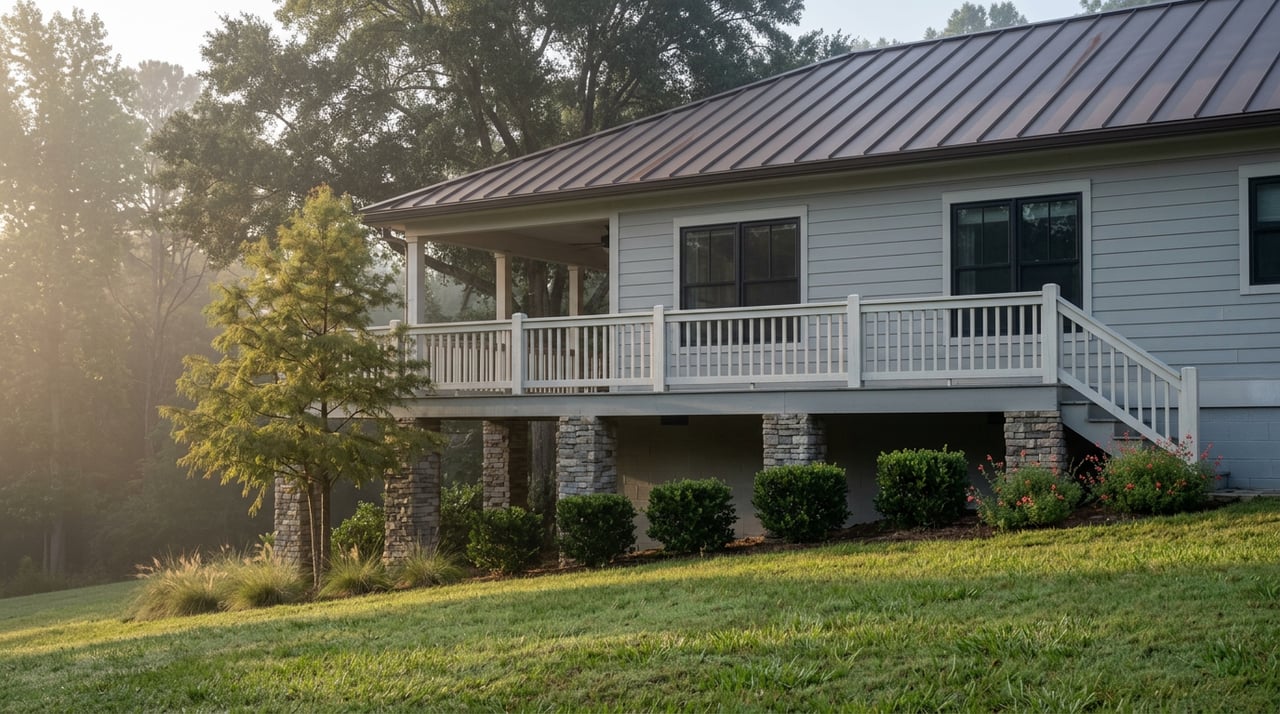
The shoreline is a separate project, and it's a much bigger one. Waterfront Unlimited, a contractor with a long track record building on this specific lake, has been direct about what the drawdown years actually did to private waterfront structures. Wood docks that would normally get routine maintenance sat exposed for years while the lakebed was dry, and a lot of them need full replacement rather than repair. The company's approach now is steel pilings driven to refusal and poured concrete decks, built specifically because wood structures on this lake tend to rot, warp, and need constant upkeep over a decade of exposure to Guadalupe River conditions.
There's also an urgency to bulkhead work that didn't exist a year ago. Shorelines that sat dry and exposed during the drawdown are now back under full water pressure, and erosion at the waterline is a live concern in a way it simply wasn't while the lake was empty. Waterfront Unlimited's own process reflects that: stabilize the bank with a bulkhead first, then build the dock or boathouse on top of it. That's two phases of work, done in sequence, for every property that deferred waterfront maintenance during the years the lake was down. Multiply that across however many lakefront lots sat idle since 2023, and you get a contractor backlog that has nothing to do with how fast the water itself came back.
What's Already Open While the Shoreline Catches Up
The businesses that don't depend on a dock have had an easier return. Laguna Marina McQueeney is back to renting boat lifts and slip storage, the kind of setup that gets a family back on the water even before their own dock is rebuilt. On the food side, the lake's regular rotation is running again: Blake's Cafe, Lake McQueeney Thai Cuisine, Gloria's Mexican Restaurant, Lulu's Mexican Food, Pica Taco, and Morning Buzz Coffee Co. for the early crowd heading out to the ramp. The Deeply Rooted Bar has become a natural stop for anyone easing back into evenings by the water now that there's actually water to look at.
None of that required a construction crew or a permit. It's the part of lake life that snapped back the moment people had somewhere to launch from, even while plenty of private docks are still under a tarp waiting on steel pilings and a scheduling slot.
This Isn't the First Time This Lake Has Organized Itself
If the last few years felt like an unusual amount of collective effort for one small lake, that's consistent with how this community has handled a crisis before. Friends of Lake McQueeney formed in the 1990s in response to a hydrilla infestation so severe it made swimming, boating, skiing, and fishing nearly impossible across most of the lake. That group raised the money and the political will to bring in herbicide treatment and sterile grass carp, and the lake recovered. The same organizational muscle is what got residents to the ballot box in 2020 to fund their own dam, years before most people outside the immediate area understood how serious the situation with the aging Guadalupe River dams had become.
That history is worth knowing if you're trying to gauge how long the current dock backlog will actually last. This isn't a community waiting passively for a contractor to get to them. It's one that has already shown it organizes, funds, and finishes long projects when the lake is at stake. The water came back on its own schedule this spring. The shoreline will come back on this community's schedule, which has a track record of getting things done, just not overnight.
For now, the honest summary for anyone living here is simple. The lake is full, the water's clear, the marina is renting slips, and the restaurants around the water are busy again. The dock rebuild queue is long, the bulkhead work is real, and if your own waterfront project is still in progress, you're not an outlier. You're just on the slower half of a two-speed recovery that the whole lake is working through at the same time.
If you're weighing a waterfront project of your own, or just want to talk through what the lake's comeback means for property here, Jorgenson Real Estate knows this stretch of the Guadalupe River lakes well and is happy to talk through what you're seeing on your own shoreline.