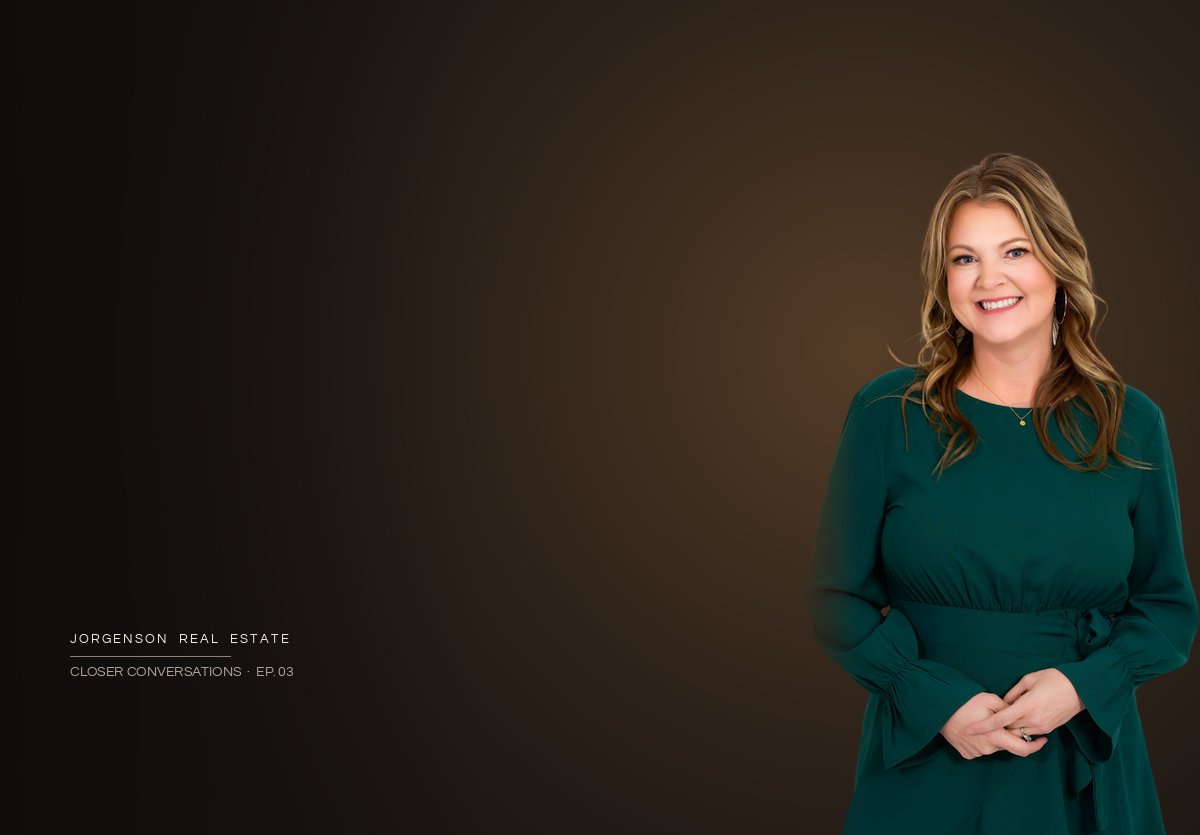
Crystal Long is a broker associate and agent growth manager at Jorgenson Real Estate. She has been in real estate for almost nine years, nearly eight of them with JRE, and works with many veterans, first-time buyers, new construction buyers and higher-end clients from her home base in Liberty Hill. Her big idea is simple: the market that feels "slow" today is what normal looks like. The sell-in-a-weekend years were the exception.
Key takeaways
- Selling in 30 to 60 days, and sometimes 90, is normal; when Kasey started in 2009 and 2010, six months was the bar.
- Depending on eligibility, many veterans can keep a home bought with a VA loan as a rental and use a VA loan again on their next home.
- In today's buyer-leaning market, Crystal has had several veteran buyers get their closing costs completely covered, with some or all of their earnest money back at closing.
- The VA's IRRRL, a streamlined refinance, can make it easier to lower your rate later if rates drop.
- At higher price points, offers often come in about 3% to 5% below list, which feels bigger only because the dollar amount is bigger.
- Before you buy farther out, check several commute routes, not just the average drive time.
Is it normal for a house to take 30 to 60 days to sell?
Yes. Kasey remembers agents in 2009 and 2010 putting up billboards that said "your home sold in six months guaranteed." Today, depending on where you look, the average is usually 30 to 60 days and sometimes 90. Sellers who hit day 30 or 40 start to worry, but that's normal. Crystal agrees, and says it was normal when she started in 2017 too. "There really was just a brief spurt of time that things sold in a weekend," she said. "Most of the time, real estate lives in the market that we're in now," she said.
Crystal's favorite market is a balanced one, or as close as you can get. "It feels like everybody just has a minute to breathe and kind of think through things," she said. For more on pricing and timing, see our guide to selling a home in Central Texas.
Can I use my VA loan more than once?
This is the point Crystal most wants veterans to hear. Depending on eligibility, you can keep a home you bought with a VA loan, turn it into an investment property, and still use a VA loan on your next home. "It's a great way to build wealth and still put zero down," she said. She added that VA loans have a lower interest rate than conventional loans, even with 20% down.
Kasey did exactly this. He bought a house with his VA loan, outgrew it, bought another with his VA loan, and rented out the first one. He still owns it today. They also talked about the VA IRRRL, a streamlined refinance. If rates go down, Kasey said, "you can sometimes negotiate a free refinance with your mortgage servicer" to get the lower rate. Texas is also friendly to veterans, including property tax exemptions tied to disability ratings. Learn more on our military and veterans page and in our guide to property taxes, MUDs and PIDs.
How much can buyers negotiate right now?
Quite a bit. This year Crystal has had several veterans get their closing costs completely covered, with money back at closing, including some or all of their earnest money. "They're really getting in with zero dollars," she said.
At higher price points, sellers are often surprised by lower offers. Crystal says that in percentage terms it's about the same across the board, with offers coming in 3% to 5% under. "It just feels like it's a lot less when it's a larger number," she said. Homes farther from Austin have felt it more, since large employers have been bringing remote workers back into the office, first a few days a week and now five. Our guide to buying a home in Central Texas explains how offers and concessions work.
Is Liberty Hill or Georgetown too far to commute?
It depends on your routes, not just the map. Crystal moved to Liberty Hill five years ago for larger lots, less traffic and good schools. She says many people don't want to drive more than about 20 minutes if they can help it. So while she's showing a home, she looks up the buyer's workplace and shows them the range of routes they'll have. "I think it's always great if you have three routes that are under 35 minutes," she said, so you have options if something happens. Toll roads help as a reliable backup. Kasey added that the area is getting real infrastructure investment, like 183 and rebuilt cut-through roads.
Liberty Hill has range. Santa Rita Ranch offers homes on larger lots and plenty of community events, and buyers who want a couple of acres with a minimal HOA have options too. Georgetown has been busy. In his midyear review, Kasey found that about a third of JRE's business this year was in Georgetown. Crystal knows Wolf Ranch well and describes it as having a Hill Country feel, mature trees, an infinity-edge pool, a fitness center and parks. Right across from the community's overlook are the 3D-printed homes that have everyone curious. Crystal expects some buyers to wait and see how they hold up. See our guide to living in Georgetown and the full communities list.
What should I know about new construction in a master-planned community?
Many of the veterans Crystal works with lean toward new construction, and Kasey counts her among JRE's top new construction agents. She likes that many master-planned communities in northwest and northeast Austin have several builders. If you want a neighborhood for its schools or amenities, you can still choose among price ranges, floor plans and finish-out. Kasey noted that bigger neighborhoods often run from entry-level homes up to estate series on wider, larger lots.
If you want more control, Texas also has custom builders who will let you work with an architect to change a floor plan or bring in your own finishes. Production builders tend to be stricter. Builder reputation matters too. Buyers often ask which builders agents have had good experiences with, and Crystal says real experience is what lets an agent answer that honestly. Our guide to buying new construction in Central Texas covers what to ask.
Kasey's endorsement: whether you're a veteran, a first-time buyer, shopping for new construction or looking at the higher end, Crystal knows it well, especially in Williamson County and north Travis County. Reach out to Crystal, even for a simple question, or contact any JRE agent. More episodes are on the podcast page.
Questions from this episode
Can a veteran use a VA loan more than once?
Yes, depending on eligibility. Crystal Long says many veterans can keep their first VA-financed home as an investment property and still use a VA loan, often with zero down, on their next home. Kasey Jorgenson did this himself and still owns his first house.
What is a VA IRRRL?
It's a streamlined refinance available only on VA loans. If rates drop, Kasey says you can sometimes negotiate a free refinance with your mortgage servicer to get the lower rate, and Crystal notes the process can sometimes let you skip a monthly payment.
How long does it take to sell a house in Central Texas right now?
Kasey says that, depending on where you look, the average is usually 30 to 60 days and sometimes 90. Crystal says that's normal; the weekend sales of the COVID era were a brief exception.
Can a buyer get the seller to pay closing costs?
Often, in today's market. Crystal has had several veteran buyers this year get their closing costs completely covered, with some or all of their earnest money back at closing.
Listen to the episode
Also on Apple Podcasts, Spotify, YouTube. All episodes.
In this episode
- 0:00Real Estate Straight Up Kickoff
- 1:24Crystal’s Path Into Real Estate
- 3:10VA Loans Beyond First Use
- 6:38Liberty Hill And The Move Outward
- 7:40Higher-End Market Negotiation Basics
- 11:00Georgetown Growth And Wolf Ranch
- 14:08What A Balanced Market Looks Like
- 20:00New Construction Builder Shortlist
- 21:24Leadership And Agent Collaboration
- 23:32How To Connect And Share
Related
Full transcript
Read the full transcript
Real Estate Straight Up Kickoff
Kasey Jorgenson 0:01 Welcome to Real Estate Straight Up, where we skip the scripts and talk about what's really going on in the Central Texas real estate market. I'm Kasey Jorgenson, founder of Jorgenson Real Estate in Round Rock, Texas. This is where we break down how deals are actually getting done, what top agents are doing differently, and what most people aren't saying out loud about this market right now. No fluff, no BS, just real estate straight up. Well, welcome back to Real Estate Straight Up. I'm Kasey Jorgenson, founder of Jorgenson Real Estate. Today we're meeting with Crystal Long, who is a broker associate here with Jorgenson Real Estate. And she's been with us almost the second longest in the office at this point. So, yeah. Yeah. Yeah. And she is our top producer, especially for this year for 2026. And so we're excited to get her in here. This is Closer Conversations where we talk with our top agents and other top agents in the market and to kind of dig into what makes them special and share some about them.
Crystal Long 1:04 So I'm super excited.
Kasey Jorgenson 1:06 Hi. Crystal Crystal loves being on video. So this is exciting.
Crystal Long 1:14 This might be the first time you've seen me on video. That's how much I love it.
Kasey Jorgenson 1:17 Yeah. Yeah. So we uh we we twisted her arm to get her in here today and share all of her all of her secrets. So
Crystal’s Path Into Real Estate
Kasey Jorgenson 1:24 all right.
Crystal Long 1:25 Make it easy, Kasey.
Kasey Jorgenson 1:26 I'll take it. We'll take it. It'll be easy. Here's the easiest question is what got you into real estate? Where are you from? What's your background? Like what brought you here?
Crystal Long 1:36 So I have a background in accounting, love the numbers part. While I was in college, though, I also waited tables and I loved people and I actually missed that job. And that people don't believe that sometimes, but I loved interacting with different people and that the job wasn't the same day after day. So the accounting way took me to, I was working for a real estate investment company and kind of handling the book side, but that can get lonely. And I started again kind of thinking of how I could maybe weave all those things together.
Kasey Jorgenson 2:08 The spreadsheets weren't talking back to you?
Crystal Long 2:10 No, they were not. And you know I like to talk. I really like to talk. And I genuinely really like people, and I think that shows. And I a lot of people say that in this business, but I truly do, and I get attached to them. And so I just miss and I miss meeting different people and they're different personalities. And so it kind of naturally flowed, and I'm really excited. And I will be going on in August. It will be nine years in real estate.
Kasey Jorgenson 2:36 Nine years in real estate and almost eight years with us.
Crystal Long 2:40 Yes.
Kasey Jorgenson 2:40 That's really cool. So you got to see the numbers side and dug into the spreadsheets and and really kind of got to lean into the back end. You missed the people side, and so you ultimately transitioned into sales.
Crystal Long 2:53 Right.
Kasey Jorgenson 2:53 You came out here and I remember when we first met, I think that I was teaching a class, right?
Crystal Long 3:00 Yeah.
Kasey Jorgenson 3:01 Yes. Yeah. And you were friends with one of our existing agents that was with us.
Crystal Long 3:04 Right. Yeah. She's one of my best friends still.
Kasey Jorgenson 3:06 Yeah. And then we got you.
Crystal Long 3:08 Yeah.
Kasey Jorgenson 3:09 Got you to come over
VA Loans Beyond First Use
Kasey Jorgenson 3:10 here, right? So All right. So let's talk a little bit about kind of business today. So you've been doing this for almost a decade. You have your broker's license, you're a broker associate, and your clientele is is it's I think it's really cool because I know a huge chunk of them are a lot of veterans and a lot of first-time buyers around that median price point. And then I know that you work with a lot of our higher-end clients as well on the luxury side. So why don't we talk about the vets?
Crystal Long 3:39 Sure.
Kasey Jorgenson 3:40 You like working with the vets?
Crystal Long 3:41 I do, yes. And I love that Texas is so veteran-friendly. I think it draws a lot of veterans here that after they're retiring are even looking for a job right out of the military. And I think that's a big part of the culture and I love it.
Kasey Jorgenson 3:55 Yeah, when uh when you say the Texas government is like super friendly, that's one of my favorite things, is when I well, obviously like the disability rating is not a favorite thing. But if they have it, like how good they are with with the property tax exemptions.
Crystal Long 4:10 Right. Yes, the tolls and just a lot of extra benefits that that they get here.
Kasey Jorgenson 4:16 Yeah. So when it comes to kind of working with vets, we we were talking a little bit before before we started filming. What's the one thing that you wish you could drive home to veterans that that may have even used their VA loan once already? But like what's one thing you'd want to drive home to them?
Crystal Long 4:32 Aaron Powell Yeah. So I think what I've I've found that a lot of them don't realize is depending on their eligibility, they can keep their existing home where they've used a VA loan and turn that into an investment property and then use, still use a VA loan on their second property. And it's a great way to build wealth and still put zero down and not have to worry about pulling the equity out of your existing home or using a different loan program. Because I think the other thing that people don't realize is VA loans have a lower interest rate than conventional 20% down people, or even putting more than 20% down. And so if you can use that benefit, you know you really want to take advantage of that.
Kasey Jorgenson 5:13 Yeah, we I know that when I first bought my property, I bought a house, I lived there, we outgrew it, and I was able to go and purchase another house with my own VA loan and rented that out, just like you said.
Crystal Long 5:27 Right.
Kasey Jorgenson 5:27 So and I still own that first house today, which was an amazing wealth-building tool for me. So yeah. So veterans, you can use it more than once.
Crystal Long 5:36 Yes. And the big thing, too, that we're still able to do, and especially in this market right now, being more of a buyer's market, is get those closing costs covered. So I've this year I've had several veterans where I've got their closing costs completely covered. They're getting money back at closing, some of their earnest money back at closing, if not all of it. So they're really getting in with zero dollars. And you know, to to use somebody else's money to invest in real estate is a really cool opportunity. And I want them to take advantage. Trevor Burrus, Jr.
Kasey Jorgenson 6:04 And the VA also has that Earl program, too. So even though rates are a little higher right now, and the VA is uh rates to as of today filming, they're probably about 6.25 or so. But with the Earl program, the VA is unique to them. It's a sh basically a streamlined refinance to where if rates go down, you can sometimes negotiate a free refinance with your mortgage servicer just to get whatever the current lower market rate is.
Crystal Long 6:31 So super easy sometimes skipping a monthly payment with that process too. So it's very easy.
Liberty Hill And The Move Outward
Crystal Long 6:38 Yeah, good opportunity.
Kasey Jorgenson 6:40 Yeah. And so where do you live? What part of Central Texas?
Crystal Long 6:42 I'm in Liberty Hill, Texas, which is northwest Austin, big time growing area. We moved out there five years ago now, which has gone by super fast.
Kasey Jorgenson 6:52 We were a trendsetter.
Crystal Long 6:54 Well, I I know you think that, but it people had already kind of started to move out that way. But COVID was pushing people further out in Austin in general, and not having to commute daily was a big factor in that. We we were drawn to larger lots and less traffic and all those fun things. Great schools.
Kasey Jorgenson 7:12 Yeah, and your house is great. Like you have I do love our entertainers home, plenty of space, and you have that huge shop too. So you can't go find that easily an affordable town for sure. Well, and um and I know part of that too. So we talked about the veterans, and then we have kind of the higher-end clients that that you work with, right? And so with that, I know that there are a lot of higher-end homes, especially in that kind of western and northwestern part of Williamson County. How's it been kind
Higher-End Market Negotiation Basics
Kasey Jorgenson 7:40 of working in that market?
Crystal Long 7:41 Good. So it's very diverse too. It depends on, you know, kind of what you're looking for, your lifestyle, and how you're gonna spend your time when you're not working. Santa Rita Ranch has some really beautiful homes on larger lots and they have several community events, and you kind of feel closer knit and plugged into things. But if you prefer to be on a couple acres, you want kind of that freedom, maybe to still be in like a minimal HOA, there's those opportunities as well.
Kasey Jorgenson 8:09 Yeah.
Crystal Long 8:10 The neat thing about Texas too is we have several different custom home builders that you can use. You don't just have to use some of the big names, and they can offer you a lot of different finishes and options.
Kasey Jorgenson 8:20 And it's the bummer about some of the big production builders is they they they're very strict. Right. Like this is our floor plan.
Crystal Long 8:27 Yes.
Kasey Jorgenson 8:28 And this is what you get. So yeah, Liberty Hill does have that diversity of the Trevor Burrus. Exactly.
Crystal Long 8:32 So if you want to, you know, again, meet with an architect to change the floor plan or select some of your own design finishes and bring them in, you know, with the true custom build, the builders will will let you do that.
Kasey Jorgenson 8:42 So kind of how's it been? How's the market been feeling at those higher price points, right? Because we're we're filming this on July 1st here in 2026. So we're in an odd time. We've got conflict happening overseas and things, and and markets are fluctuating sometimes hourly, it feels like. So how's it been kind of working with them and and navigating those higher price points?
Crystal Long 9:08 I think something that sellers are surprised about is that offers will come in, you know, quite a bit lower. But when you're putting things into a percentage way, it's really kind of the same across the board that things might be coming in three to five percent less. It just feels like it's a lot less when it's a larger number. Yeah. And and buyers know that they have some negotiating room. And then again, the further out you get from Austin, people have been feeling it more because people have been going back to work and workers, you know, Dell and a lot of these big businesses that were fully remote, they started phasing people in a few days a week and now it's five days a week. Yeah. And while our commutes are better than other parts of the country, it's still a lot of people don't want to spend more than 20 minutes if they don't have to. And so if you're on the outskirts in these higher price points, those were some of the jobs that those people had that were buying those properties. And so it's it's a little bit slower for sure.
Kasey Jorgenson 10:01 Aaron Powell I will say what's nice about that part of town here in Central Texas, they're putting a lot of money into the infrastructure, like 183 and a lot of the kind of the cut-throughs that used to be a janky two-lane road filled with potholes are now like actual proper streets.
Crystal Long 10:18 Aaron Powell So one of my favorite things that I do with buyers when I'm taking them out and commute something that's super important to them is while we're at the property, I'm searching up their workplace. They've given me their address before or whatever, and then I'm showing them not just the average commute time, but that they'll have several different routes and what those kind of range from. Because I think it's always great if you have three routes that are under 35 minutes or something, because then you have options if something happens. And just to show them that they'll have that flexibility. And so absolutely out that way. I mean, yes, some of it's a toll, but the thing I like about tolls is when you need them, they're there and you can pretty much count on no traffic or little to no traffic.
Kasey Jorgenson 10:58 Aaron Powell Yeah. One accident
Georgetown Growth And Wolf Ranch
Kasey Jorgenson 11:00 blocks off that that whole that whole way in. It's good to have a backup. Trevor Burrus, Jr.
Crystal Long 11:05 Right. Exactly.
Kasey Jorgenson 11:06 Yeah, it was really interesting. I was kind of taking a look at our numbers and doing my monthly audit of things, and it's you know, middle of the year, and I kind of wanted to see where most of our business was happening, like where most agents were buying, helping clients buy and sell. And I was really surprised to see that about a third of our business was happening in Georgetown. So that's been kind of like our epicenter for this year. So I I think part of it is you were ta talking before about Georgetown, and it's it's like one of the biggest boom towns in the country still.
Crystal Long 11:38 Yes, absolutely. And I think just like with any area as the growth is pushing out, Georgetown would be the next logical place. You know, we love being here in downtown Round Rock, and we work by referral, but some of our clients are kind of feeling that they want to sell in Round Rock and they're fine making that commute to get a little bit more for their money or something newer, or maybe it's the master plan community that's driving them out there.
Kasey Jorgenson 12:02 And you've been one so one of the biggest master plan communities I know is Wolf Ranch.
Crystal Long 12:07 Yes, for sure.
Kasey Jorgenson 12:08 And we've done you're you're one of our top performers in in Wolf Ranch. I know we have listings in there right now. We're actually negotiating deals in in Wolf Ranch kind of as we speak. So that was a really great, great master plan community with really diverse housing right there near 35.
Crystal Long 12:24 Oh yeah. And it's beautiful. It's got the hill country vibe, and you've got all those mature trees and infinity edge pool, fitness center, parks, all the things you could want.
Kasey Jorgenson 12:34 And what's that, what do they call that? There's like a weird spot that people park.
Crystal Long 12:39 Oh, yeah. It's like a lookout.
Kasey Jorgenson 12:41 Yeah, it's like a lookout. It's like where teenagers probably go and hold hands, whatever.
Crystal Long 12:45 For sure. Yeah. It's beautiful. Sunset watching.
Kasey Jorgenson 12:48 Yeah, I've I've pulled over there and done work at that at that little overlook and thing. Oh, and it's also right across from the 3D printed homes in Wolframs. Yes. Uh-huh.
Crystal Long 13:00 And I did I have seen those. I went to a special thing that they were doing when they were building those. And that was very interesting. And to my knowledge, that was one of the first in the country of 3D printed homes. And it's interesting that they chose Georgetown to kind of pilot that.
Kasey Jorgenson 13:14 They're pretty cool. Like the inside has like the ridges. Like there's no, it's not drywall, it's actually the the concrete.
Crystal Long 13:20 Right. Yes. Yeah, I got to watch one of the machines doing it too. It was very interesting. So I think some people are a little skeptical, kind of like with electric cars. They want to see how they perform. But then look where that went. So we could be headed there with three prenodomes.
Kasey Jorgenson 13:37 Yeah, wait and see like the first the first good windstorm that comes through.
Crystal Long 13:41 Right.
Kasey Jorgenson 13:42 See how they they shape up compared to the others.
Crystal Long 13:44 Kind of over time. I'm what I'm curious about, since it is different materials, how that's going to look over time.
Kasey Jorgenson 13:49 Yeah, it's the science is supposed to be great and they're pretty solid. And I can tell you this you know, we had a listing that well is a was a historic home and temple, and it had nine-inch thick concrete walls. Right. And that thing's air conditioner barely had to work.
Crystal Long 14:03 I mean it was like insulated.
Kasey Jorgenson 14:04 Solid inside. Yeah. Yeah. Yeah. Well, cool.
What A Balanced Market Looks Like
Kasey Jorgenson 14:08 You want to switch gears a little bit?
Crystal Long 14:10 Sure.
Kasey Jorgenson 14:10 All right. So you've been here with us for like eight years, right?
Crystal Long 14:14 Yes.
Kasey Jorgenson 14:15 We've had some good times. We've had some fun times. We've had Crystal was with us through our our crazy peak of the that COVID market.
Crystal Long 14:23 Right.
Kasey Jorgenson 14:23 And then she's been with us through this this shift. This kind of downturn. I try to explain to the agents like most people we see a shift like this every eight to ten years. But you've seen a ton of stuff.
Crystal Long 14:40 Right.
Kasey Jorgenson 14:41 Looking back over your past eight years, what was your favorite uh market during that time?
Crystal Long 14:47 Ooh, that's interesting. Well, it's just been different depending on who you're representing, because right now it's fun with buyers because I can feel like I can negotiate more for them and they have more choices. But it was fabulous seeing some of my sellers enjoy and get to benefit from so much equity. And it was almost life-changing for some of them to give them decisions that they could make because of how much their home had appreciated. So that was fun to see because I got to help some of the people that I helped buy their house sell their house.
Kasey Jorgenson 15:18 Yeah.
Crystal Long 15:19 And there were challenges with that too, though. I feel like my ultimate favorite is a balanced market or as close as you can get to it.
Kasey Jorgenson 15:27 It's kind of what we're in now. It is.
Crystal Long 15:28 It does. It feels like everybody just has a minute to breathe and kind of think through things. Sellers can think through things and buyers can feel like they have time to make decisions and you know you have choices. I like that.
Kasey Jorgenson 15:41 Yeah. The the balanced market is the rarest market. And we've been in it for a minute. So yeah, it's going to be interesting when things shift back in favor of sellers when that eventually happens. So that's a good point. When it comes to you talked about kind of winning with the sellers and then now in the crazy times, right? It was my favorite when people said it must be really good being in real estate right now. It was good for the sellers, but it was also So much work for us. Yeah. Remember, we had listings and we're getting like 60 offers sometimes that we had to go. Waiting in line to go see houses because there were so few available.
Crystal Long 16:25 And you know, being the bearer of bad news with buyers when they've made five offers. But I think during that time and this time too, what I've loved most and why I've been with Jorgenson Rural Estate for this whole eight years is we've collaborated a lot and we were able to kind of give each other real-time advice on what was working. And that our clients benefited tremendously for that because we were ahead of the game when we were negotiating and we had ways of winning in those situations. And I mean, it it felt really good that we could serve them that well and and win most of the time. And we had strategies on how to re you know, present the offers for the sellers too, and the best ways to kind of navigate that. And we all learned from each other quickly.
Kasey Jorgenson 17:16 That was one of my favorite times in terms of like the collaboration. It was a challenge back then. But yeah, the this market today, uh it is, it is a little bit more comfortable. I you know, we I I tell this story to a lot of people and for whoever listening, but when I started, it was 2009-2010, and there were big-time real estate agents that would put a billboard up that said your home sold in six months guaranteed. And six months was like was was the bar.
Crystal Long 17:45 And now you were winning if it was five months.
Kasey Jorgenson 17:48 Oh, yeah. If you sold that thing in three months, people are like, man, you sold that quick. What's going on here? But yeah, the but now, you know, depending on where you look, the average is usually between kind of 30 to 30 to 60, sometimes 90 days. And people kind of hit that 30 to 40 day mark and they're getting like, why is it my household? Why is my household? I I I think and you correct me if I'm wrong with what you're experiencing right now, but that's that's normal.
Crystal Long 18:14 Very normal. And it was very normal when I got in the market in 2017, too. Right. And so there really was just a brief spurt of time that things sold in a weekend. But because it seemed like it was so fresh, that's all people remember. And that was unique even then. And but because it was kind of exciting and people, I'm sure at their workplaces were coming to work, I just sold my house for 50,000 over in three days. People still remember those stories because they sounded so cool. And so this feels strange to them that but really it's not. And most of the time, real estate lives in the market that we're in now, more like this.
Kasey Jorgenson 18:52 So that was my favorite market when you first joined the 2017 to 2019 time period. It was nice and in steady growth. It wasn't a hardcore seller's market, but it was it was still kind of a seller's market back then.
Crystal Long 19:07 Right. The builders were were good to the buyers and they're good to them now, but during that crazy time, they weren't so great. And there were some of them that, you know.
Kasey Jorgenson 19:16 And any builders listening to this now or in the future, we remember every building.
Crystal Long 19:23 We may or may not even have a list.
Kasey Jorgenson 19:24 Aaron Powell We do have a wink. Yeah. We we we kept we kept track. And so we remember the builders that that did right when it was the craziest, and we remember the builders that tried to take advantage of our people.
Crystal Long 19:39 So well, for sure, because that's a question buyers ask, and that we can uh answer when we have experience. And they ask, you know, in your experience, how do you feel about this builder? Which builder do you think is better? Which builder have you had, you know, a good experience with? And then even about the construction or the quality of the home. And so it's important when we have real life experience that we
New Construction Builder Shortlist
Crystal Long 20:00 can share with them about that.
Kasey Jorgenson 20:00 Aaron Powell I'm gonna put you on the spot right now because Crystal, I haven't checked these numbers, but is one of our top new construction agents as well, because many veterans kind of gravitate toward new construction and and so on. Who are some of your favorite builders?
Crystal Long 20:16 Ooh. I do have quite a few.
Kasey Jorgenson 20:19 I I really like we're not gonna talk smack about builders right now. That's a different episode.
Crystal Long 20:24 I like Perry and Toll Brothers, Scott Felder, Highland.
Kasey Jorgenson 20:29 Love Highland.
Crystal Long 20:30 Chesmar. So yeah, there's there's quite a few good ones here. And I love that we have choices. I think that's one of my other favorite things about a lot of these Northwest Austin and and even Northeast Austin master plan communities is they'll have several different builders. And so if you like subdivision for a certain reason because of the schools or the amenities, you have choices usually within different price ranges and then with different builders. So you can kind of fit one, maybe the floor plan is what is most important to you or the finish out. But I like that it also makes the neighborhood look more diverse and not so cookie-cutter when they've got different builders in there.
Kasey Jorgenson 21:08 So And most of most of the bigger neighborhoods, they plan it out to where they have kind of more of an entry-level type of home all the way up to those estate series where it's act on larger lots, wider lots.
Crystal Long 21:19 Yes, exactly. So it can appeal to all different types of buyers, which is
Leadership And Agent Collaboration
Crystal Long 21:24 nice for sure.
Kasey Jorgenson 21:24 Yeah. Yeah. And some other kind of more recent news here. So our brokerage is growing. And as we grow, it's interesting to watch because a lot of our agents we don't have a lot, we don't have like new new agents here, Metro Organs and Real Estate at this point. But we do have agents that run into some tricky situations. And what's interesting is they'll reach out to me, of course, as their broker and ask questions. But if I don't answer within 30 minutes, because I'm doing something like a podcast. 30 seconds. Yeah, 30 seconds maybe.
Crystal Long 21:55 We expect you.
Kasey Jorgenson 21:56 Yeah, Crystal is one of the other people that that they reach out to right away. So if I don't answer, it's like dad didn't answer, call mom or whatever. And so they go to Crystal. And so we recognize that. And what's cool is we've kind of we've quote unquote promoted Crystal to a leadership position. So she's an agent growth manager here and kind of formalized that that that kind of role that just kind of morphed because people trust you in your experience. And you answer things, thankfully, very similar to how I answer things, so they're getting consistent advice.
Crystal Long 22:30 That's what eight years will do. Yeah. For sure. And I went to KC with a lot. And I was very grateful because even the small questions, sometimes I needed a little more reassurance. Like my gut was okay, but I liked your style. And so I feel like that is what I've been able to kind of implement. And I love being able to give that back to newer agents or just agents that have a unique situation.
Kasey Jorgenson 22:55 But what's funny is usually you'd come to me and ask, but you already knew the answer, and your answer was already right. So it was more.
Crystal Long 23:02 Sometimes it's your style or your delivery that I liked too. But sometimes you just need to talk things through with another agent. And I mean, that's another thing that I feel like I benefit from is you just it it's like a collaboration slash meeting of the minds, a little different perspective.
Kasey Jorgenson 23:19 Well, we we appreciate you. So anyway, yeah, it's it's great to to it's great to just see it, you know, as we grow to be able to have broker associates and and senior people with a lot of experience
How To Connect And Share
Kasey Jorgenson 23:32 be able to kind of pour into others. So we appreciate the collaboration just as much.
Crystal Long 23:36 Thank you.
Kasey Jorgenson 23:37 But yeah, so I will say this. I usually close these kind of with with an endorsement of sorts. I will say, as of as of this moment in 2026, Crystal is our number one sales agent at Jorgenson Real Estate.
Crystal Long 23:51 No pressure to keep that going.
Kasey Jorgenson 23:52 No pressure, no pressure. She's our number one sales agent. She loves working with veterans, she loves working the luxury side of things, and she knows all of that and new construction like the back of her hand. So if you're looking, especially in that kind of Williamson County, North Travis County market, a crystal is a fantastic resource to reach out to, even if it's just a conversation or a simple question. She is a great person to reach out to in chat. So thank you. We appreciate you. All of your five-star reviews show that your clients appreciate you.
Crystal Long 24:27 Those are super special to me, you know that.
Kasey Jorgenson 24:28 Yeah. Yeah.
Crystal Long 24:29 She takes If I could get paid in reviews.
Kasey Jorgenson 24:31 Yeah, she could get she would charge X percent plus a review. Right.
Crystal Long 24:36 And the percent would be lower than the Well, it's usually because I like them so much, then it feels like they liked me back. Yeah. They appreciated me.
Kasey Jorgenson 24:44 Well, it it shows, so good job. All right. Well, this has been closer conversations.
Crystal Long 24:51 You're amazing.
Kasey Jorgenson 24:52 Good job. See y'all later. And that's a wrap. If you got value out of this, don't keep it to yourself. Send it to someone who needs to hear it. And if you're in central Texas thinking about making a move, we're here at Jorgenson Real Estate. We'll see you next time.
Transcript generated from the episode audio and lightly corrected; it may contain small errors.