
Investing in real estate can take many forms, one of them being crowdfunding. Crowdfunding allows a group of investors to partake in financing an investment property. Pooled funds are gathered from multiple parties and used to purchase the property, with varying ownership stakes. This type of financing makes it possible to purchase commercial or residential properties for those who might not otherwise be able to finance them.
How Crowdfunding Works for Real Estate
Real estate crowdfunding allows multiple investors to pool funds online to finance a property deal. A sponsor identifies an opportunity, such as buying an apartment building, developing new housing, or funding a fix-and-flip, and lists it on a platform where investors can review key details before investing, like the strategy, timeline, and risks.
Some deals are open to non-accredited investors, while others are limited to accredited investors based on regulatory requirements. Once you invest, you typically participate through equity, where returns come from income and potential appreciation, or through debt, where returns come from interest payments.
Typically, this method is facilitated by using a public online platform in which eligible investors who are interested can contribute to funding a new property or purchasing shares in existing holdings. The platform usually handles onboarding, fund transfers, and reporting, while the sponsor manages the property and provides updates and any distributions tied to performance.
An accredited investor is someone who meets specific income or net worth requirements set by regulators, allowing them to access a wider range of private and higher-risk investment opportunities. A non-accredited investor does not meet those thresholds and is generally limited to offerings with additional protections and lower investment caps, although some real estate crowdfunding platforms are open to both.
Types of Real Estate Crowdfunding
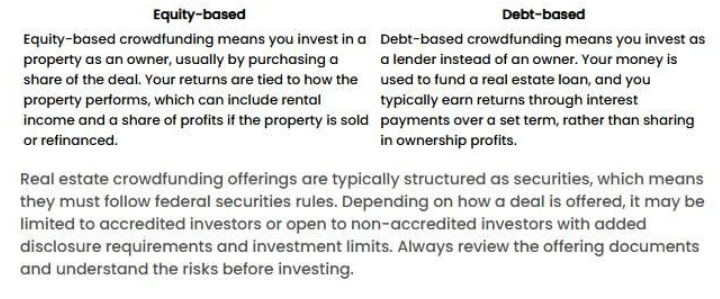
The two most common types of crowdfunding you'll come across are equity-based crowdfunding and debt-based crowdfunding. The differences between them essentially lie in how the person is invested after the fact.
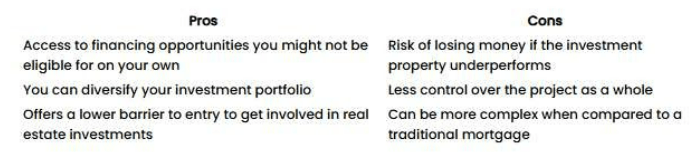
Pros and Cons of Real Estate Crowdfunding
WHO Real Estate Crowdfunding is Right for
-
Investors who want to be hands-off: Can be an option if you want potential real estate returns without having to manage properties, tenants, or maintenance.
-
Beginner investors looking to get their foot in the door: Can be an entry point for newer investors who want to get started in real estate without buying a property outright.
-
People focused on diversifying their real estate portfolio: Can be helpful if you want to spread your money across different properties, markets, or real estate strategies.
-
Long-term investors: Can be suitable for those who can commit funds for several years and don't need quick access to their cash.
-
Accredited and non-accredited investors exploring alternatives: Suitable for investors looking beyond traditional REITs or direct ownership, depending on platform eligibility.
Crowdfunding vs Traditional Loans
Real estate crowdfunding and traditional loans are methods of financing property deals, but they operate very differently. Understanding how each option works and its risks can help you decide which approach better fits your goals and your ideal level of involvement.
Crowdfunding
Real estate crowdfunding pools money from multiple investors through an online platform to fund a specific property or real estate project. Investors contribute smaller amounts and earn returns through equity ownership or interest payments, depending on the deal structure. The sponsor manages the property, making crowdfunding a mostly passive investment, and funds are usually locked in for a set period with limited liquidity.
Traditional Loans
Traditional loans involve borrowing money from a single lender, such as a bank or private lender, and repaying it over time with interest. Approval is typically based on credit, income, and collateral, and the borrower retains full ownership and control of the property while being responsible for repayment regardless of performance.
Best Real Estate Crowdfunding Sites
If you're looking for a platform to get started with real estate crowdfunding, here are some of my top picks to help you decide which might be best for you:
Fundrise: Best for First-time Investors
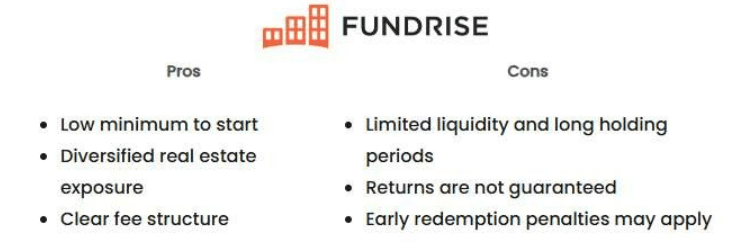
Why I like Fundrise
I like Fundrise for investors who want a straightforward way to add real estate exposure without purchasing or managing property directly. The low minimum makes it accessible, and the platform’s diversified funds can help reduce the risk of relying on a single property or market.
I also like that Fundrise is designed for long-term investing, with an emphasis on simplicity and portfolio-style exposure. It can be a great option for those who value a more passive approach and prefer a clear, structured investing experience.
CrowdStreet: Best for Accredited Investors
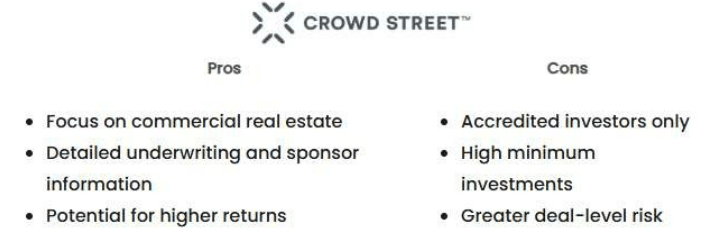
Why I like CrowdStreet
CrowdStreet is a top pick for experienced investors who want direct access to individual commercial real estate deals rather than pooled funds. The platform provides in-depth information on each opportunity, which can appeal to investors who want to evaluate properties, markets, and sponsors more closely.
I also like that CrowdStreet offers exposure to institutional-style real estate projects that are typically difficult for individual investors to access. For accredited investors with larger amounts of capital and a higher risk tolerance, it can be a strong option for building a more hands-on, deal-specific real estate portfolio.
RealtyMogul: Best for Commercial Real Estate Investments
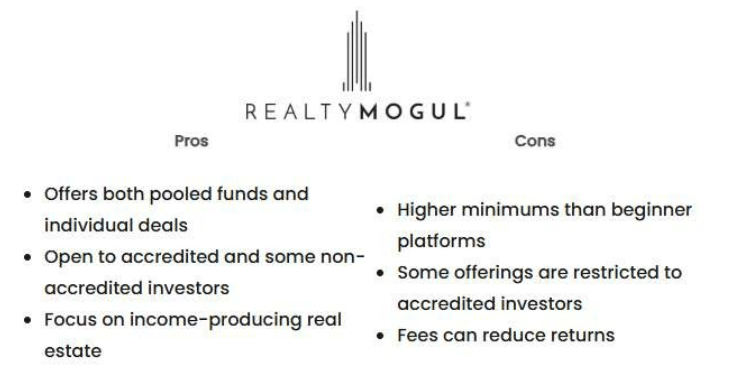
Why I like RealtyMogul
RealtyMogul can be a good fit for investors who want flexibility between diversified funds and individual property investments. The platform offers a mix of private real estate funds and single-property deals, which can work well for investors at different experience levels.
I also like that RealtyMogul focuses heavily on income-generating properties, such as apartment buildings and commercial assets. For investors looking for ongoing cash flow and a more traditional real estate investment feel without direct ownership, this may be an ideal choice.
How to Get Started Crowdfunding Real Estate
If you’ve decided that you want to get your foot in the door and want to invest in real estate via crowdfunding, there are a few key factors to consider when getting started. Keep in mind the following:
Consider Your Role
Decide how hands-on you want to be. Some crowdfunding investments are truly passive, where you invest and collect potential returns while the sponsor manages the property. Others let you choose individual deals and strategies that match your goals, like income-focused rentals or growth-oriented development projects.
Make Sure You Qualify
Not every deal is open to every investor. Some offerings are limited to accredited investors, while others are available to non-accredited investors under specific rules. Before you get attached to a platform or project, confirm what you’re allowed to invest in based on the platform’s requirements.
Find the Right Platform and Opportunity
Compare platforms based on investment minimums, fees, property types, holding periods, and transparency. Then evaluate the actual opportunity the same way you would any investment. Look at the property details, the sponsor’s track record, the business plan, and how returns are expected to be generated.
Get Involved
Create an account, complete identity verification, and fund your investment. If you’re new, consider starting smaller so you can learn how the platform reports updates, handles distributions, and communicates changes without getting in too deep at the start.
Follow Up on the Details
After you invest, stay engaged. Read investor updates, track distributions, and pay attention to timeline changes, occupancy progress, refinancing plans, or sale milestones. Real estate crowdfunding is usually a long-term game, so monitoring the details helps you stay informed and make smarter decisions on future deals.